
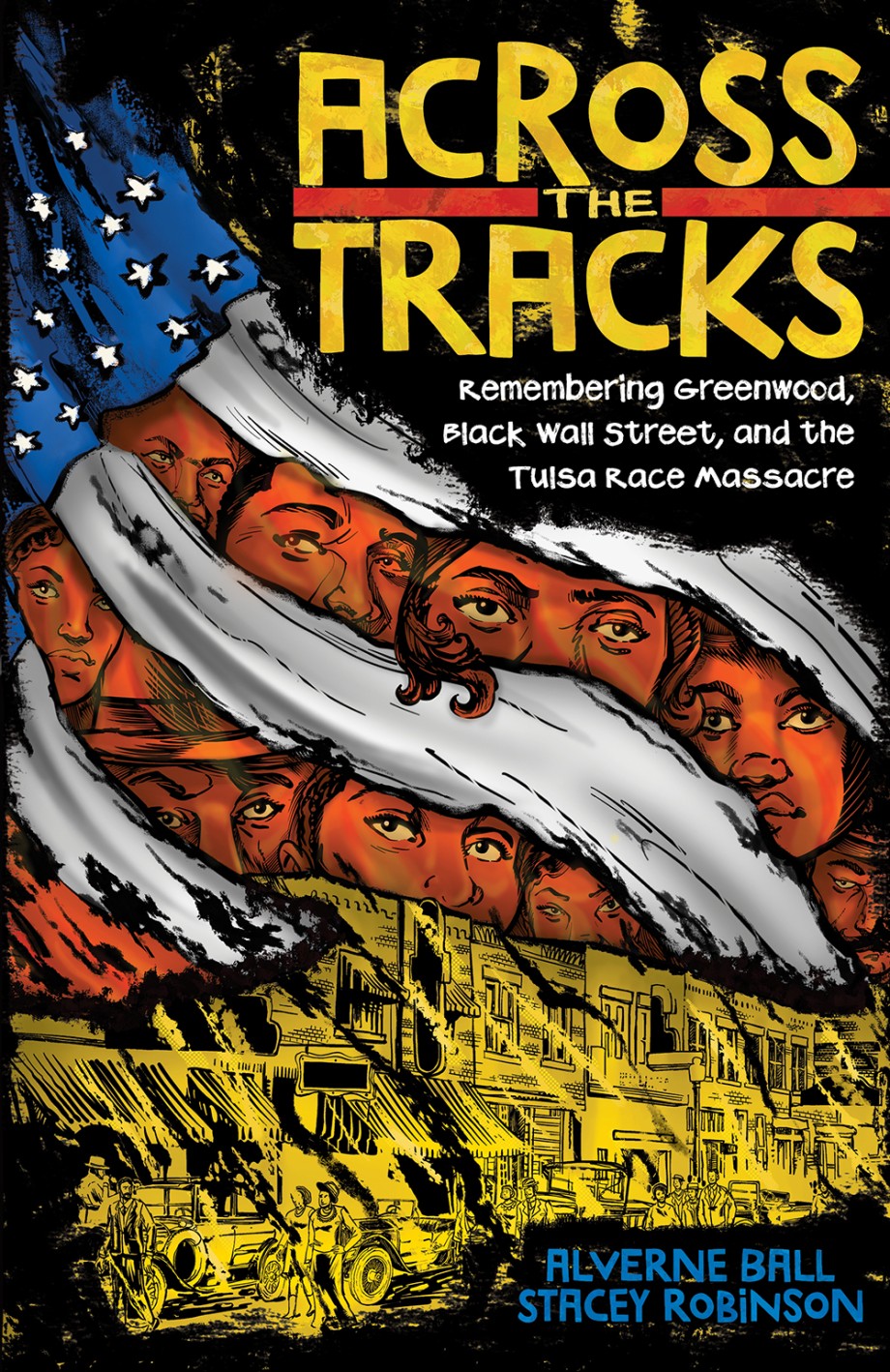

Across the Tracks is a graphic nonfiction account that brings to life the story of Greenwood, Oklahoma—once known as Black Wall Street—and one of the most significant chapters in American history.
Written by Alverne Ball and illustrated by Stacey Robinson, the book introduces readers to a thriving Black community whose achievements and cultural vitality shaped a powerful legacy prior to the devastating 1921 Tulsa Race Massacre.
Before the events of 1921, Greenwood was a center of Black entrepreneurship, creativity, and self-determination. Through vivid illustration and accessible narrative, the book highlights the businesses, leaders, and everyday residents who built a prosperous community during a time of systemic inequality.
The Tulsa Race Massacre is presented within this broader story—showing not only the violence that devastated Greenwood but also the deep history that preceded it and the resilience that followed. Ball's narrative emphasizes remembrance and context, ensuring that readers understand both the tragedy and the enduring strength of the community.
Designed for students, educators, and general readers, Across the Tracks combines graphic storytelling with supplementary materials including a timeline and historical essay, offering a clear and engaging introduction to the rise, destruction, and rebuilding of Black Wall Street.
"Across the Tracks not only personalizes and therefore heightens the tragedy we know will come, but it also reframes that tragedy. Black perseverance and joy take center stage in a way it seldom does when discussing Greenwood." —The Beat
Praise
“Focus on rebuilding efforts ends this brief but informative book on a hopeful note”Booklist
—
“Across the Tracks not only personalizes and therefore heightens the tragedy we know will come, but it also reframes that tragedy. Black perseverance and joy take center stage in a way it seldom does when discussing Greenwood. This story is about Greenwood, not Tulsa and the race massacre, a deliberate choice on Ball and Stacey’s end.”The Beat
—
“Educational and accessible, this feels well crafted for any American history class, or as a primer for general readers unfamiliar with this dark chapter of American history.”Publishers Weekly
—