
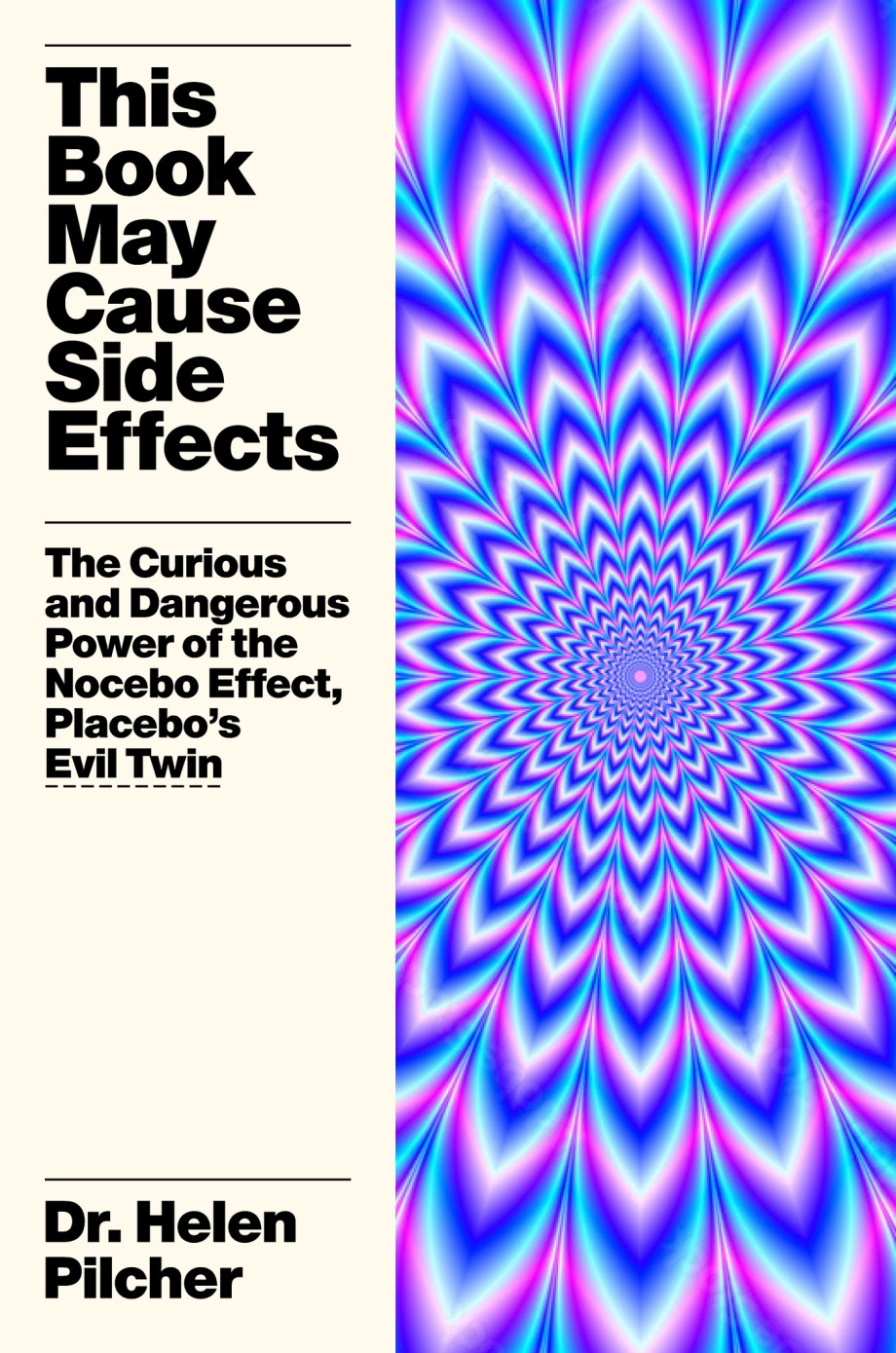

In This Book May Cause Side Effects, Dr. Helen Pilcher explores the "nocebo" effect—the shadow side of the placebo—and shows how our convictions can sometimes quite literally harm us
Take the COVID vaccine. If you experienced side effects from your COVID vaccine, there is a 76% chance that these were caused by your belief that you would experience them—not by the mRNA circulating your system. Or, even more extreme, take the case of Sam Shoeman: Although his diagnosis of late-stage esophageal cancer turned out to be erroneous, he was nonetheless dead in months. The power of words, especially from health-care providers, is so formidable that even a wrong diagnosis can actually kill. Our health, or lack of it, is as much about our expectations about illness and its causes as it about damaged cells or wayward hormones. And because we can never fully step outside our cultural context, it’s only by understanding these effects that we can hope to prevent them.
This Book May Cause Side Effects explores a range of contemporary and historical examples of the nocebo effect, from “hex deaths” to TikTok “illfluencers” to functional neurological disorders, or real illnesses with real symptoms that nonetheless lack any kind of physical basis. Although the nocebo effect has always existed, the advent of the Internet has accelerated its spread. Thankfully, though, Dr. Helen Pilcher also walks us through steps we can take individually and culturally to avoid invoking the nocebo, like reevaluating our relationship to technology, setting up risk-minimizing guidelines in health-care settings, and even crowbarring open-label placebo therapies and nocebo-blocking medicines into the pharmacological toolkit. This Book May Cause Side Effects tells us that though our own minds construct the nocebo effect, it is also in our power to stop it.
Praise
“As a gastroenterologist, I have long been fascinated by the intricate, bidirectional dialogue between the brain and the gut. In This Book May Cause Side Effects, Helen Pilcher masterfully explores one of the most underappreciated forces in medicine: the nocebo effect—our remarkable capacity to make ourselves sick through expectation alone. With scientific rigor, wit, and deeply personal storytelling, Pilcher illuminates how beliefs, labels, diagnoses, and even well-intentioned medical conversations can profoundly shape physiology.
For those of us who work daily with patients suffering from chronic digestive symptoms—many of which sit at the complex intersection of mind and body—this book is both validating and essential. Pilcher reminds us that symptoms are never ‘just in the head,’ yet they are always influenced by it. Understanding this does not diminish suffering; it empowers healing.
This book is a compelling call to reexamine how we communicate about illness, how we frame risk, and how we harness the mind’s extraordinary power for good rather than harm. It should be required reading for clinicians and patients alike.”
—Robynne Chutkan, MD; author of Gutbliss, The Microbiome Solution, The Bloat Cure, and The Anti-Viral
“This subversive and devastating takedown of the mind-body binary will change the way you think about health, medicine, and that body part known as the mind. Revelatory.”
—Sonia Shah, author of The Next Great Migration
“Captivating . . . This book will widen your range of understanding of who you are and how your complexity offers a whole new world of risks that are both real and not real. It may cause side effects, but it will be really good for your health too.”
—Robin Ince, author of Normally Weird and Weirdly Normal and former cohost of The Infinite Monkey Cag
“Few medical phenomena are as fascinating as the nocebo effect, and few science writers are as engaging as Helen Pilcher. This entrancing book will change the way you think about your mind and your body.”
—David Robson, author of The Expectation Effect and The Laws of Connection
“Absolutely fascinating and never more relevant than today. Helen has a talent for making confusing subjects clear in your mind. I will be recommending this one far and wide.”
—Dr. Julie Smith, author of Why Has Nobody Told Me This Before?