

A moving portrait of Yuri Kochiyama—an ordinary woman who became an extraordinary activist—and her bond with Malcolm X
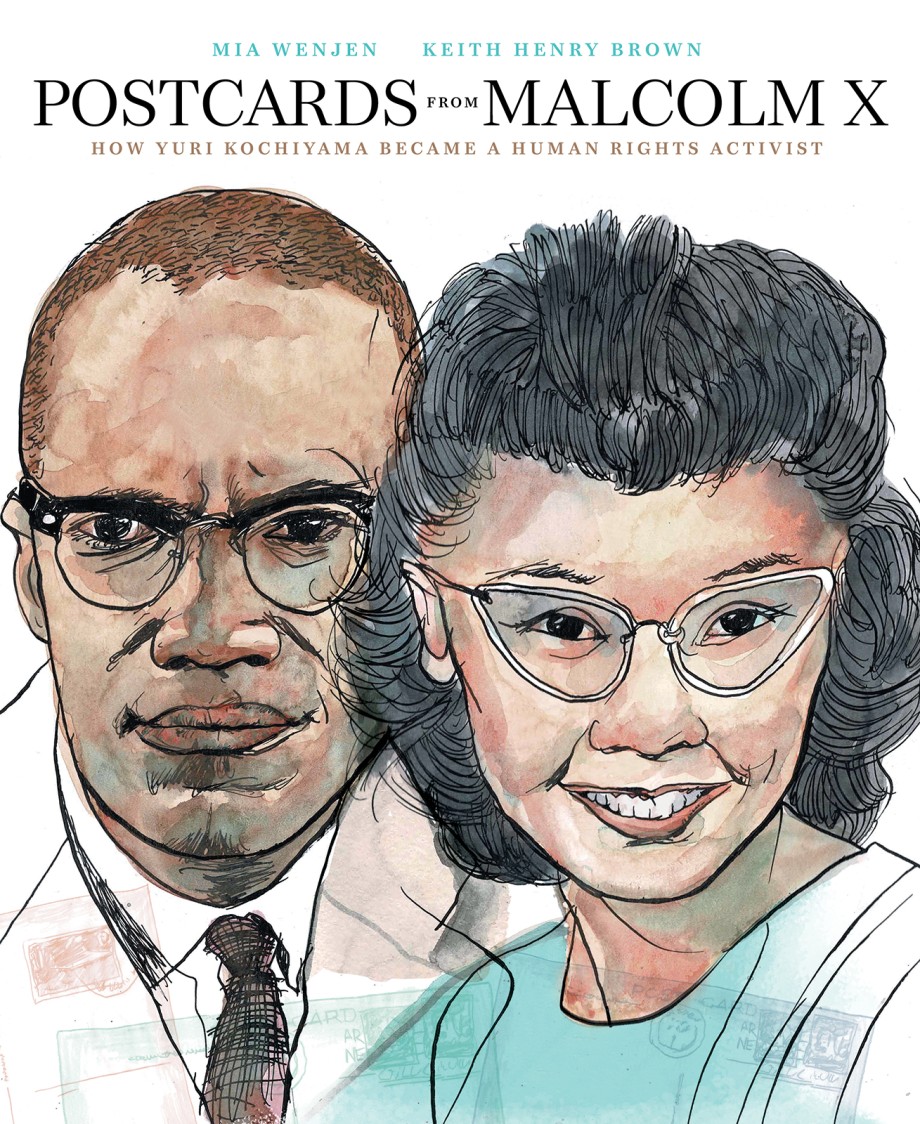
When Japanese American activist Yuri Kochiyama shook Malcolm X's hand at a courthouse in 1963, it sparked a transformative friendship built on justice, solidarity, and hope.
In Postcards from Malcolm X, Mia Wenjen and illustrator Keith Henry Brown trace Kochiyama's remarkable journey from a small-town girl in California to a fearless advocate for human rights. Her experiences—her father's death at the hands of the FBI, her family's internment during World War II, and her work with Japanese American soldiers—shaped a life of activism that connected her to Harlem's civil rights struggle and, ultimately, to Malcolm X himself.
Through accessible, narrative storytelling and evocative art, this book introduces readers to an unsung hero of the civil rights movement and to the extraordinary friendship between two leaders from different communities, bound by a shared vision of equality.
Featuring original postcards from Malcolm X, extensive back matter, and a detailed timeline, this is both a powerful history and an inspiring call to action for young readers.
Praise
“This book introduces middle school readers to the life and activism of Yuri Kochiyama, highlighting her meaningful correspondence and powerful friendship with Malcolm X. Informative text and painted compositions detail the relationship between this Japanese American activist and the African American civil rights icon. The book also includes Malcolm X’s assassination in the Audubon Ballroom, where Kochiyama was in attendance, depicting the event with sensitivity and without graphic imagery. Stunningly layered illustrations of ink, watercolor, gouache draw readers in with visual interpretations of key moments. Excellent back matter includes a timeline, short paragraph-long biographies of both historical figures, along with a glossary and notes from the editor, author, and artist. VERDICT School libraries need true stories of the enduring importance of cross-cultural alliances and community organizing. Recommended for middle grade nonfiction collections.”
—School Library Journal
“[A[ stirring biography . . . an approachable and energetic portrait of an activist.”
—Publishers Weekly
“A striking biography of a remarkable activist.”
—Kirkus Reviews
“This biography offers a powerful and necessary reframing of who she was before and after her friendship with Malcolm X, and how she was a lifelong change-maker with a generous heart. The watercolor illustrations, fluid and evocative of the narrative's snapshot approach of building a life from key moments, fill most of every page, as detailed backgrounds add context to the foregrounded people and events.”
—The Bulletin of the Center for Children's Books