
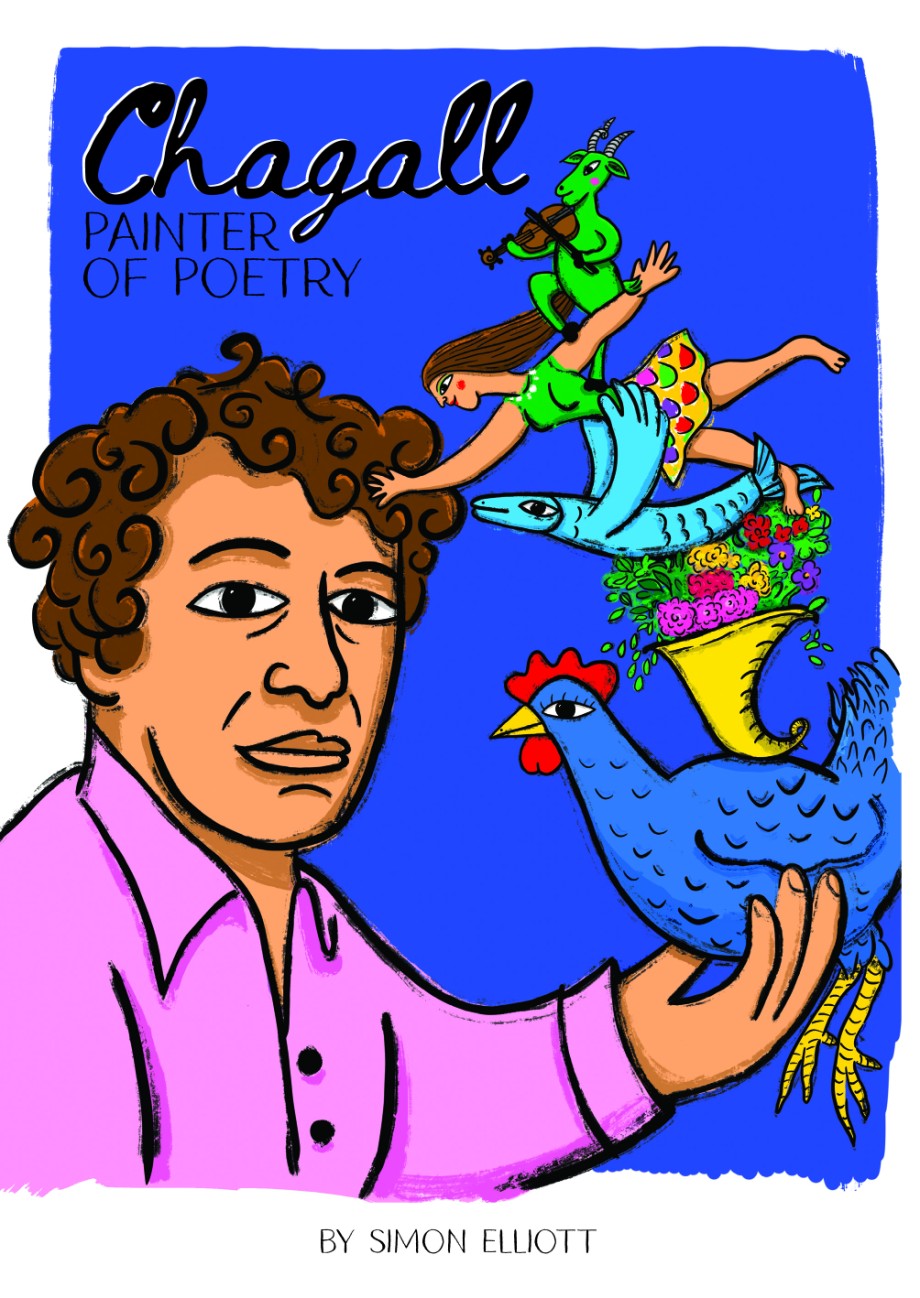
"Poet, dreamer, and exotic apparition . . ."—this is a graphic novel about the colorful life of modernist pioneer Marc Chagall
The artist Marc Chagall (1887–1985) once described painting as "a window through which I could fly into another world"—which is just what he did. He grew up Jewish in the so-called Pale of Settlement (now Belarus) in the Russian Empire, relocating to Paris in 1910, at the height of the belle epoque, and then served an uncomfortable time as an art commissar in Bolshevik Russia. He would spend his long lifetime outrunning and outliving a succession of oppressive regimes (Tsarist, Soviet, Fascist, Nazi) as numerous as the art movements he absorbed (surrealist, fauvist, symbolist, modernist) and the range of media he both liberated and illuminated. In his ceramics, stained glass, tapestry—above all, in his paintings—Chagall brought the freedom of his "colors of love" to a stark world that is too often too dark.
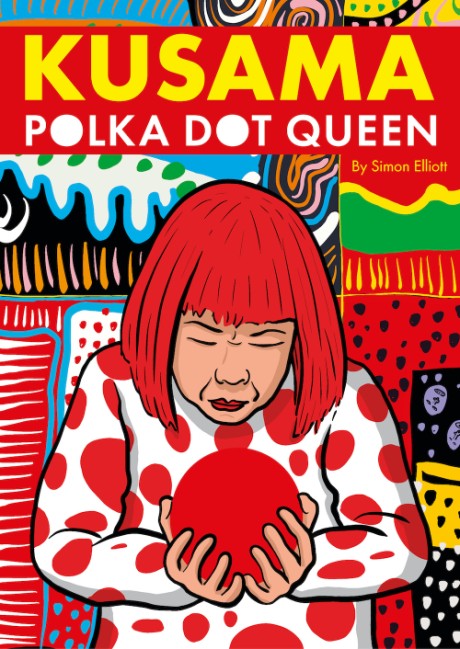
Acclaimed for his graphic biographies of Hockney (2023), Van Gogh (2024), and Kusama (2025), Simon Elliott returns with a triumphant portrait of perhaps the greatest colorist (and therefore optimist) of them all.